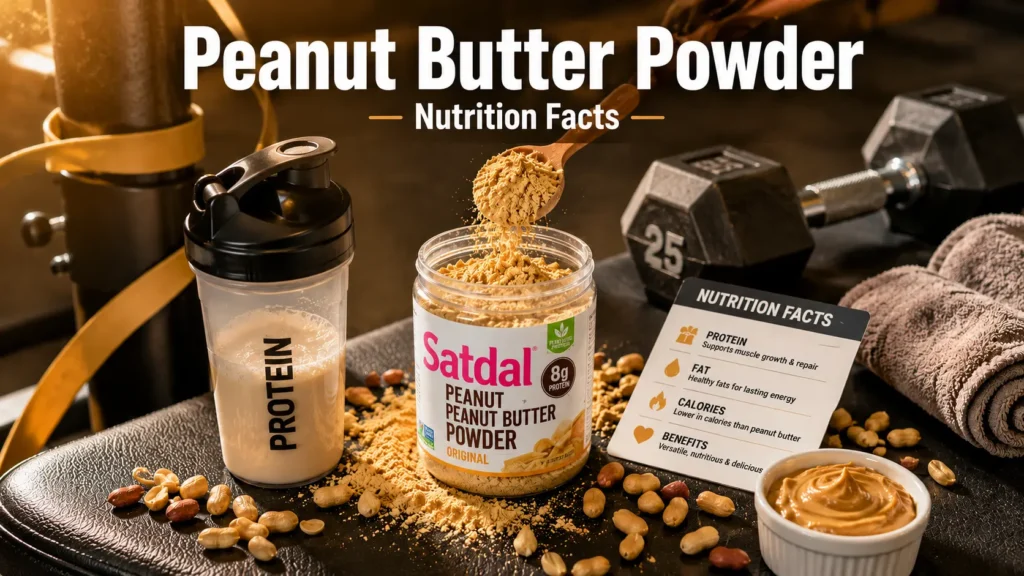
Quick Summary: Peanut butter powder delivers approximately 45–50g of protein per 100g, with 70–75% less fat than regular peanut butter — making it an elite ingredient for supplement brands, nutritionists, and health-focused food manufacturers worldwide.
As global demand for high-protein, plant-based ingredients continues to rise, powdered peanut butter has moved from a niche health food into a mainstream ingredient for supplement manufacturers, functional food brands, and B2B food importers. Yet many buyers still lack a precise, sourcing-ready picture of its nutritional profile.
This blog presents a complete nutritional breakdown of defatted peanut butter powder — the data you need to evaluate it as a commercial ingredient, formulate products with confidence, and communicate its value to end consumers.
What Is Peanut Butter Powder?
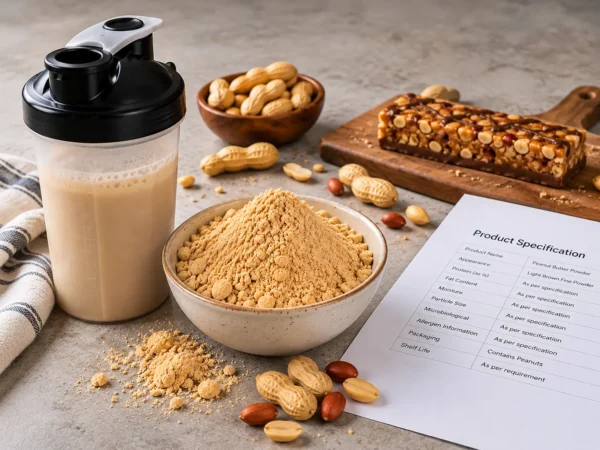
Peanut butter powder — also called defatted peanut flour or powdered peanut butter — is produced by cold-pressing roasted peanuts to remove most of the natural oil, then grinding the resulting cake into a fine, shelf-stable powder. Powder retains all the protein and micronutrients of whole peanuts while drastically reducing fat and calories.
What is defatted peanut butter powder?
Peanut butter powder is cold-pressed roasted peanuts with most fat removed, leaving a high-protein, low-fat powder.
Peanut Butter Powder Nutrition Facts per 100g
The table below reflects typical values for food-grade peanut butter powder with a fat reduction of 70–75%. Exact values vary by batch, roast profile, and processing method — always request a Certificate of Analysis (CoA) from your supplier.
| Nutrient | Per 100g | Per 32g Serving | % Daily Value* |
|---|---|---|---|
| Energy | 375–400 kcal | 120–128 kcal | 6% |
| Protein | 45–50g | 14–16g | 28–32% |
| Total Fat | 10–15g | 3.2–4.8g | 5–6% |
| — Saturated Fat | 2–3g | 0.6–1g | 3–5% |
| — Monounsaturated Fat | 5–7g | 1.6–2.2g | — |
| Carbohydrates | 25–30g | 8–9.6g | 3% |
| — Dietary Fibre | 8–10g | 2.6–3.2g | 9–11% |
| — Sugars | 5–8g | 1.6–2.6g | — |
| Sodium | 30–60mg | 10–19mg | 1% |
| Potassium | 700–750mg | 224–240mg | 5% |
| Iron | 3–4mg | 1–1.3mg | 6–7% |
| Magnesium | 160–180mg | 51–58mg | 12–14% |
| *Based on a 2,000 kcal/day reference. Values are indicative for food-grade defatted peanut butter powder. Always verify with supplier CoA. | |||
How much protein is in peanut butter powder?
Peanut butter powder contains approximately 45–50 grams of protein per 100 grams, nearly double that of regular peanut butter.
Protein Quality: Amino Acid Profile
For supplement formulators, protein quality matters as much as quantity. Peanut protein is classified as a complete plant protein — it contains all nine essential amino acids, though it is relatively low in methionine. Key amino acids present include:
- Arginine — supports cardiovascular health and nitric oxide synthesis
- Leucine, Isoleucine & Valine (BCAAs) — critical for muscle protein synthesis
- Glutamic acid — the most abundant amino acid in peanut protein
- Lysine — important for calcium absorption and collagen formation
For formulators seeking a complete amino acid profile, blending peanut butter powder with a methionine-rich protein (such as rice or hemp protein) produces a complementary, high-PDCAAS profile suitable for sports nutrition labels.
Is powdered peanut butter high in protein?
Yes. Peanut butter powder is very high in protein, providing around 45–50g per 100g — ideal for sports nutrition formulations.
Fat Profile: Healthy Lipids, Dramatically Reduced
Traditional peanut butter contains roughly 50g of fat per 100g. In peanut butter powder, this is reduced to 10–15g — predominantly heart-healthy monounsaturated fats (oleic acid) and polyunsaturated fats (linoleic acid). Saturated fat content is minimal, typically under 3g per 100g.
This lipid reduction makes peanut butter powder particularly valuable in calorie-controlled formulations, low-fat protein bars, meal replacement powders, and reduced-calorie snack coatings.
Does peanut butter powder have less fat than regular peanut butter?
Yes. Peanut butter powder has 70–75% less fat, making it ideal for low-calorie, high-protein product formulations.
Key Health Benefits for Product Formulation
Applications: Where Peanut Butter Powder Used
Global buyers and product developers are incorporating peanut butter powder across a growing range of categories:
- Sports nutrition: Protein powders, mass gainers, recovery shakes
- Functional foods: High-protein bars, baked goods, granola
- Nutraceuticals: Meal replacement powders, dietary supplements
- Confectionery: Peanut butter flavour coatings, no-added-fat fillings
- Foodservice: Smoothie bases, sauces, dressings, marinades
Sourcing Peanut Butter Powder: What B2B Buyers Should Know
When evaluating peanut butter powder for import or large-scale procurement, consider the following specifications:
- Fat content: Specify the defatting level — typically 10–15% fat for standard grades
- Protein content: Request minimum 45% protein on dry weight basis
- Aflatoxin limits: Ensure supplier complies with EU (4 ppb, 10 ppb total) or FDA standards
- Certifications: Check for FSSAI, BRC, Halal, Kosher, ISO 22000, HACCP compliance
- Packaging: 25kg PP bags for bulk, PET jars for Retails
Satdal International supplies food-grade, export-quality peanut butter powder from Gujarat, India — meeting international food safety standards for buyers in Europe, the Middle East, Southeast Asia, and North America. View product specifications and request a sample →
Conclusion
Peanut butter powder is one of the most nutritionally dense, commercially versatile plant protein ingredients available today. With 45–50g of protein per 100g, a reduced fat profile, and clean-label credentials, it delivers measurable value across supplement, health food, and functional food categories.
For importers and product developers seeking a reliable, verified source of defatted peanut powder, understanding the full nutritional picture is the first step to confident procurement. Use this guide as your baseline — and always request a full Certificate of Analysis before finalising specifications.