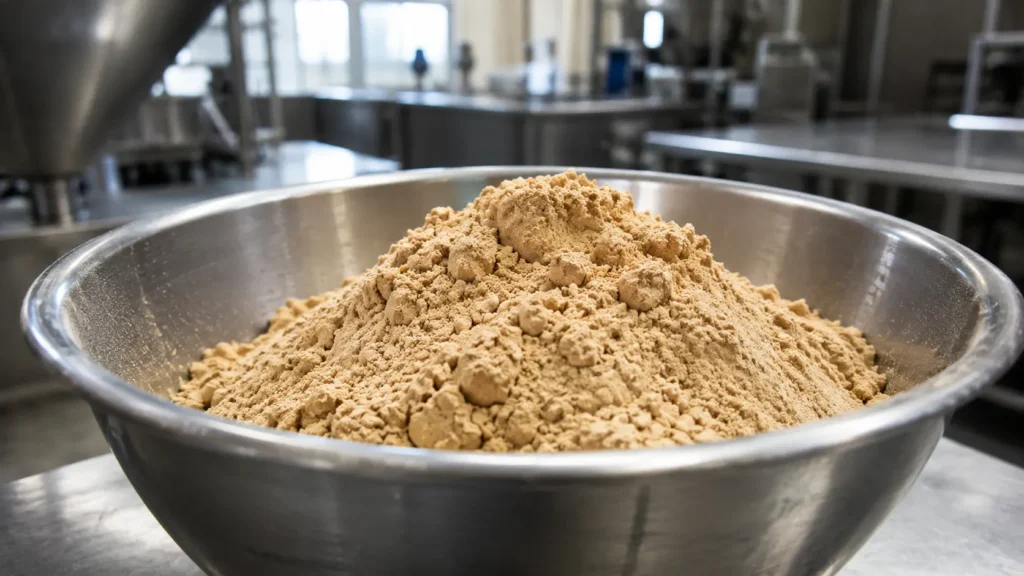
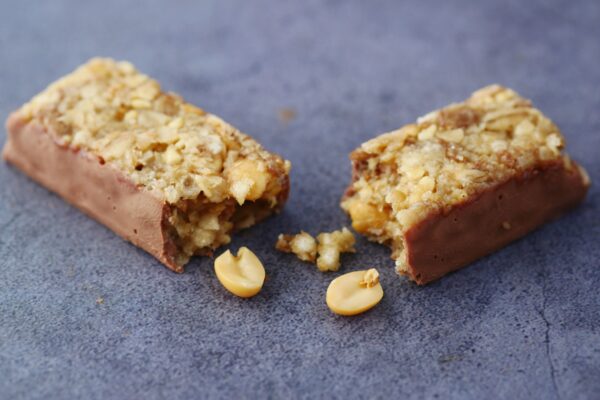
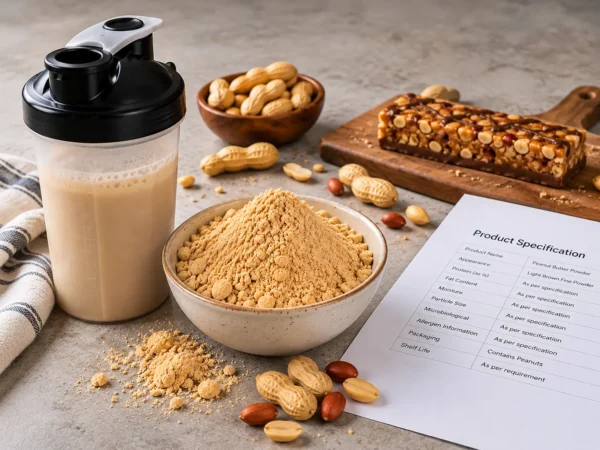
Defatted peanut butter powder is used in protein bar manufacturing, commercial bakery products, beverage and smoothie mixes, snack coatings, sauces and dressings, HORECA kitchen applications, clinical nutrition formulations, and frozen dessert manufacturing. It is valued for its high protein content (40–50%), long shelf life, and easy dispersibility in water-based formulations.
Peanut butter powder is made from roasted peanuts that have been pressed to remove most oil, then ground into a fine powder — retaining the roasted peanut flavour profile. Peanut flour, by contrast, is typically made from raw or lightly roasted peanuts and is more commonly used as a flour substitute. Peanut butter powder has a stronger flavour and is specifically designed to reconstitute into a peanut butter-like consistency when mixed with water.
Yes. In most food manufacturing applications, peanut butter powder can replace conventional liquid peanut butter at a ratio of approximately 2 tablespoons of powder plus 1 tablespoon of water per 2 tablespoons of standard peanut butter. This substitution reduces fat content by up to 85%, improves shelf life, and simplifies handling on production lines — making it technically advantageous for most manufacturing contexts.
Commercial defatted peanut butter powder typically contains between 40% and 50% protein per 100g dry weight — significantly higher than conventional peanut butter (24–28%). This elevated protein content, combined with its plant-based origin, makes it a preferred ingredient for sports nutrition products, protein-enriched bakery, and high-protein FMCG formulations targeting health-conscious consumers.
Yes. Peanut butter powder is highly suitable for HORECA supply chains due to its ambient storage requirements (no refrigeration needed), long shelf life of 12–18 months, lightweight packaging (reducing logistics costs), and precise portion control in kitchen environments. It is particularly popular in hotel chains and restaurant groups operating pan-Asian, fusion, or health-focused menus where consistent peanut flavour across large-batch cooking is essential.
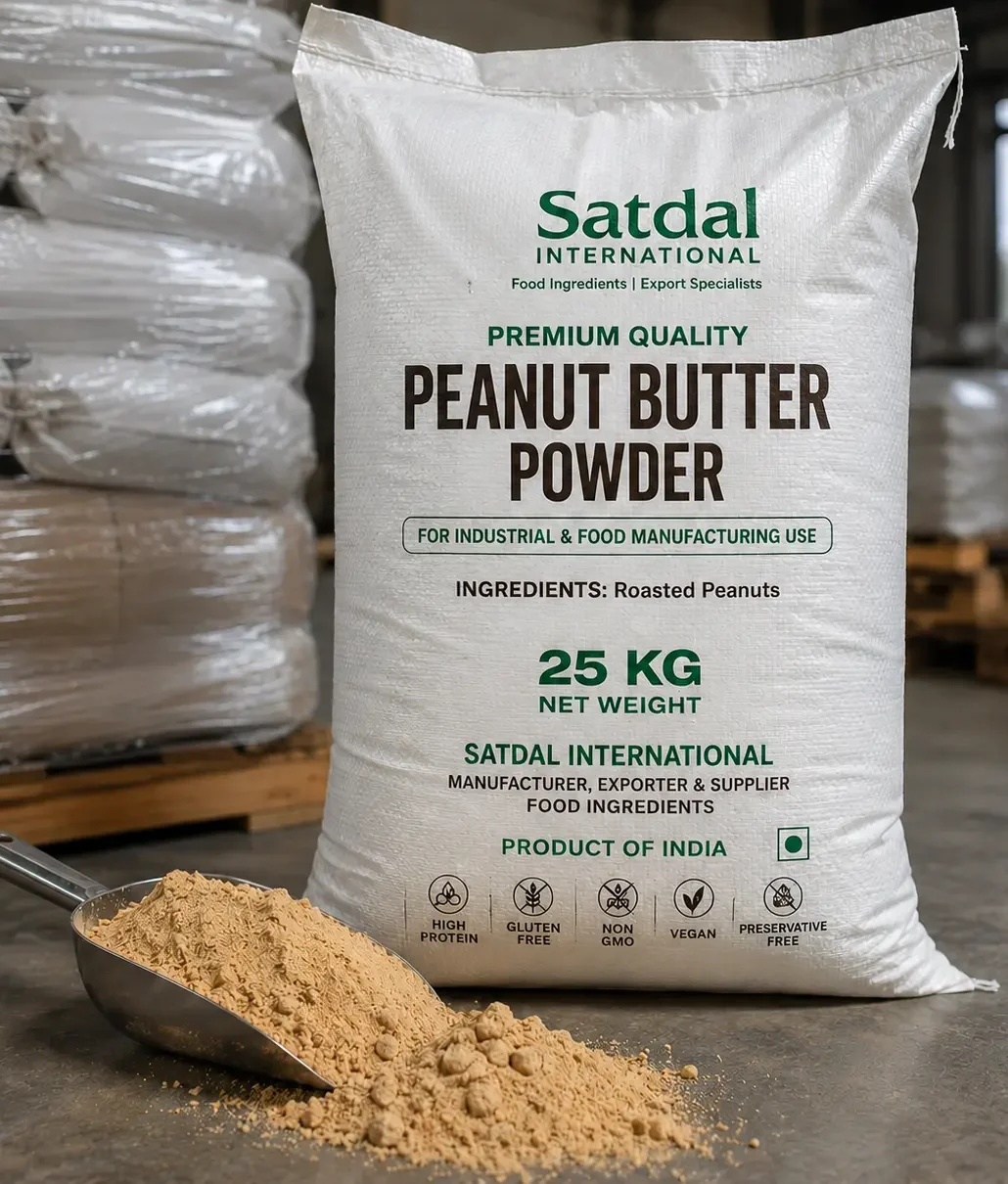
India is a leading global source of food-grade peanut butter powder, particularly from the Gujarat region. Exporters such as Satdal International supply bulk peanut powder to importers, distributors, and food brands worldwide. Key certifications to look for include FSSAI compliance, HACCP, ISO 22000, and, where required, organic or non-GMO certification. Buyers should request full specification sheets, fat content data, and allergen management documentation from any prospective supplier.
When stored in a sealed, moisture-proof container at ambient temperature (below 25°C, away from direct sunlight), commercial-grade defatted peanut butter powder has a shelf life of 12 to 18 months. Once opened, it should be resealed tightly and used within 4–6 weeks for optimal flavour and nutritional quality. This shelf stability is a significant advantage over oil-based peanut butter, which is prone to rancidity and oil separation over time.
Yes. Defatted peanut butter powder is typically produced from a single ingredient — roasted peanuts — with no added preservatives, emulsifiers, or artificial additives. This makes it compatible with clean-label positioning for food brands targeting health-conscious consumers. However, it must always be declared as a peanut allergen on product labels, as peanuts are one of the 14 major food allergens regulated in most global markets.