
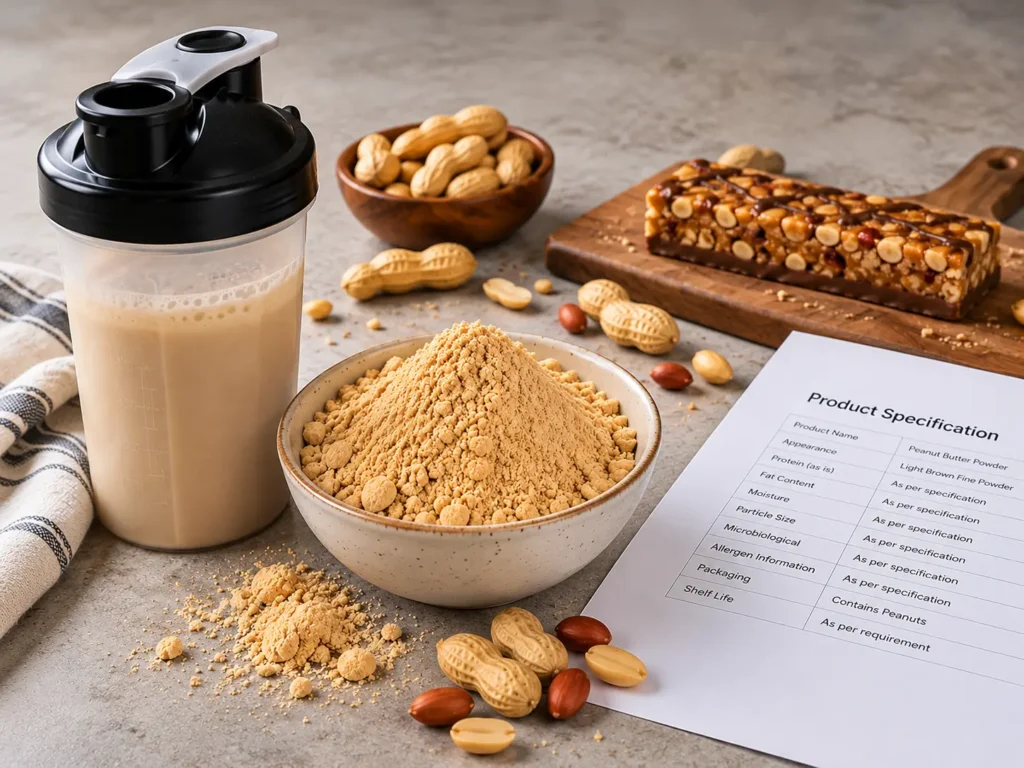
Sports nutrition developers difficult to get optimise one thing at a time. A new formula has to deliver taste, texture, protein content and a clean label together, and within a tight cost range. Peanut butter powder is one ingredient some brands are now evaluating for new ingredients because it made from roasted peanuts that are pressed to remove most of the oil, then ground into a dry powder.
Short answer: peanut butter powder can suit certain sports nutrition products as a peanut-flavour and plant-based protein contributor. Whether it works in a given protein supplement depends on the ingredient specification, allergen controls and finished-product testing. This guide covers where it may fit and what to check before approval.
Why Sports Nutrition Brands Are Considering Peanut-Based Ingredients
Everyone loves peanut flavor in bars and shakes, but working with actual peanut butter is a nightmare—it’s sticky, messy, and requires heated tanks just to pump it. Peanut butter powder solves that by handling like any other dry ingredient.
Product teams usually switch to it for a few simple reasons: it’s way easier to mix into powder blends, it gives you that rich roasted flavor naturally, and it keeps your label clean with an ingredient customers actually recognize. Just keep in mind that it isn’t a pure protein isolate. Since it’s made from whole peanuts with just the oil pressed out, you’re still getting some fats, carbs, and fiber. Plus, because peanut protein is low in essential amino acids like lysine, you shouldn’t treat it as a direct 1:1 swap for whey.
Where Peanut Butter Powder May Fit in Sports Nutrition Products
These are potential applications, not guaranteed outcomes. Results depend on the grade used and the finished formulation.
- Protein drink mixes and shake powders: as a flavour and partial protein contributor in dry blends.
- Protein bars and bites: as a dry ingredient that builds peanut flavour while adding less oil than paste.
- Sports nutrition blends: such as meal-replacement or recovery-style powders where peanut flavour suits the profile.
- Peanut-flavoured powdered products: such as oat-based or pre-mixed powder formats.
For uses beyond sports nutrition, see our overview of peanut butter powder applications in food manufacturing.
What Fitness Brands Should Evaluate Before Using It
Request the full specification first, then test the ingredient in your own formula. Key checks:
- Protein and full nutritional specification: Protein varies by grade and processing. Confirm declared values on a certificate of analysis. For typical nutrient ranges, see our peanut butter powder nutrition guide.
- Fat content: Residual fat affects mouthfeel, bar texture and oxidation risk in a blend.
- Flavour, aroma, colour and consistency: Roast level and grade change the taste profile and appearance. Check batch-to-batch uniformity.
- Solubility, dispersibility and texture: Peanut solids do not fully dissolve. Particle size can influence sediment, mouthfeel and mixing in a shaker, so test in the intended application.
- Compatibility and shelf life: Run stability testing in the finished product rather than relying on the ingredient’s stated shelf life alone.
- Allergen declarations and cross-contact controls: Peanuts are a major food allergen. Review the supplier’s allergen management, especially at sites that handle other allergens.
- Microbiological and contaminant quality: Ask about microbiological limits and aflatoxin testing, which is standard for peanut-derived ingredients.
- Regulatory and labelling requirements: Rules differ by destination market, so confirm them before launch.
Performance ultimately depends on the supplier’s specification, processing method, dosage and finished-product testing
Questions Sports Nutrition Brands Should Ask Before Approving an Ingredient
Ingredient approval for a supplement brand is largely a documentation exercise. Useful questions include:
- Can you provide a specification sheet and certificate of analysis?
- Can we receive samples for pilot trials in our own formula?
- How do you control batch-to-batch consistency, and what tolerances apply?
- Can lots be traced back to their source materials?
- What packaging is available, and how does it protect against moisture?
- Does production capacity match our forecast volumes and lead-time needs?
For a wider supplier-vetting process, including shipping and documentation, our guide to sourcing peanut butter powder from India covers the full procurement steps.
Working With an Ingredient Sourcing Partner
Satdal International is an India-based sourcing, supplier coordination and international trade facilitation company. We work with ingredient buyers who need support from specification discussion through to export coordination. Sports nutrition brands, supplement manufacturers and ingredient distributors are welcome to enquire about bulk supply options and the specifications available for their intended application.
Frequently Asked Questions
It can be, in some formats. Brands use it as a peanut-flavour and partial plant-protein contributor in powders and bars. Suitability depends on the grade, the recipe, the target consumer and the destination market's allergen and labelling rules, so pilot testing is essential.
Often yes, as part of a dry blend, but results vary. Peanut solids are not fully soluble, so test dispersibility, sediment and mouthfeel in a shaker or blender at the intended dosage before committing to a formula.
No. Peanut butter powder is a partly defatted whole-peanut ingredient that still contains fat, carbohydrate and fibre. Concentrated peanut protein ingredients are separate products with different specifications. Check the product name and certificate of analysis when comparing quotes.
Treat peanut as a declared major allergen. Review the supplier's allergen control and cross-contact procedures, confirm labelling rules in each target market, and decide whether your own production line can handle peanut safely. Seek regulatory advice for market-specific requirements.
A full specification sheet, a batch-specific certificate of analysis, samples for testing, packaging and storage details, and confirmed lead times. Approve a trial batch in your own product before committing to larger volumes.
NEXT STEP
Peanut butter powder can be a practical option for sports nutrition teams that want peanut flavour in a dry format, provided the specification, allergen controls and shelf-life performance are confirmed in the finished product. Start with the full specification, test in your own formula and ask for batch-level documentation. Brands ready to discuss their application can review the specifications and bulk supply options or contact Satdal International directly.